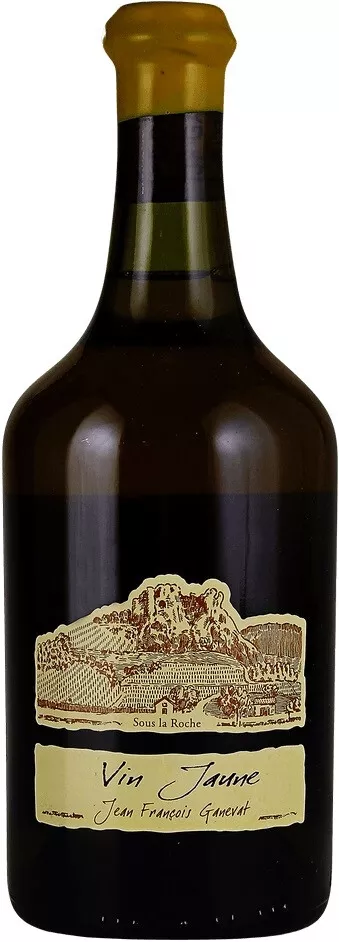
Jean Francois Ganevat
In 1998, Jean-François Ganeva returned to his native Jura after 10 years working with Jean-Marc Morey in Burgundy, in Chassagne-Montrachet. Coming from a family of hereditary winemakers, he is a 14th-generation vintner. From childhood, he helped his father in the vineyards and studied professionally at the Burgundy School of Enology in Beaune. After graduating, he stayed in Burgundy to gain practical experience.In the late 1990s, his father decided to sell the family vineyards, but Jean-François was determined to keep them. The vineyards in Rotalie, with old autochthonous grape varieties, formed a unique mosaic of terroirs. Most of these varieties weren’t approved for top-quality AOC wines, and many regional producers abandoned them. His father made simple table wines, but the vineyards preserved many rare local grapes now found only here. Today, Jean-François cultivates 17 rare varieties, including Petit Béclan, Gros Béclan, Gueuche (white and red), Seyve-Villard, Corbeau, Portugais Bleu, Enfariné, Argant, Poulsard Blanc, Poulsard Musqué, among others. From these he creates his unique assemblage called «J’en Veux».Immediately upon returning to Rotalie, Jean-François converted all vineyards to organic farming and transitioned to biodynamics by 2006. In Burgundy, he mainly worked with Chardonnay using traditional vinification and aging methods—full barrel fermentation with regular topping during aging to prevent oxidation and compensate for evaporation. He applies this Burgundian approach to his Chardonnay wines from Jura as well—a somewhat unusual practice for the region where local wines often show pronounced oxidation.Today, Jean-François produces annually between 35 and 45 different cuvées depending on the harvest. Each vineyard is unique like its grape variety; some cuvées are limited to just 50-60 liters or a single barrel. His wines are crafted in a traditional style using large oak barrels (500-600 liters). Many producers in Jura now prefer smaller barrels for aging—these accelerate oxidation and aging processes—but Jean-François prefers larger casks for their gentler influence.A few years ago, he wanted to avoid oxidative wines altogether due to their heaviness and aggressiveness. However, after tasting some local wines that were aromatic yet elegant and well-structured, he decided to experiment with making wines in that style. He ages his wines for at least three years; most undergo much longer maturation—some have been stored in barrels for over ten years.