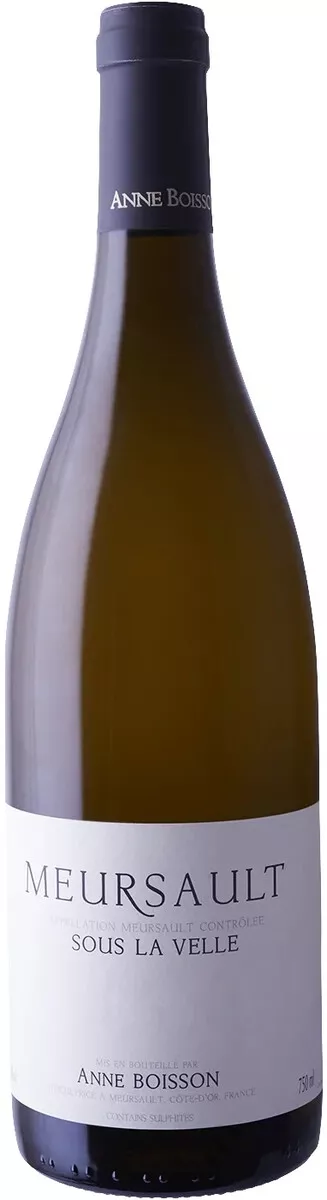
Domaine Anne Boisson
For a long time, the Boisson family sold their wines to major négociants in Beaune.
Bernard Boisson was the first to stop this practice and begin bottling under his own name. Starting in the early 1990s, he began releasing them under the Domaine Boisson-Vadot label (Vadot being his wife’s maiden name). Initially, the winemaker sold them only on the domestic market, but they quickly gained recognition from critics and wine enthusiasts. Importation of Domaine Boisson-Vadot wines to the United Kingdom only began in 2011.
In 2016, Bernard retired and passed management of the estate to his talented children, Pierre and Anne. The French wine publication “La Revue du Vin de France” calls the young winemakers the “new breath” of Meursault, describing the style of their wines as modern and precise.
Pierre Boisson has been friends since school with Raphaël Coche, the son of Jean-François Coche from the legendary and benchmark Domaine Coche-Dury. Together, they often discuss winemaking techniques and vineyard practices. Many critics note that stylistic references to Coche-Dury can be found in Boisson’s wines.
Most of the Boisson vineyards are located in Meursault, with additional plots in Auxey-Duresses, Monthélie, Pommard, and Beaune. The estate totals 8.5 hectares of land, including plots with very old vines planted in the 1940s and 1950s.
In the vineyard, Anne and Pierre strive to use organic methods whenever vintage conditions allow. According to the winemakers, caring for soil and vine health is an essential condition for creating terroir-driven wines.
After Bernard Boisson retired in 2016, Anne and Pierre agreed on who would release wines from which vineyards under their own names. Anne creates only white wines; the most valuable plots passed to her include Meursault 1er Cru Genévrières, Meursault Sous la Velle, and Meursault Chevalières. Together with regional plots, she owns 1.5 hectares.
Pierre owns 3.5 hectares, including the plots Meursault Les Grands Charrons, Pommard, Auxey-Duresses 1er Cru, and Monthélie. Thus, wines from Bernard Boisson’s vineyards may be released under the labels “Pierre Boisson,” “Anne Boisson,” and, since 2019, “Boisson Frère et Sœur.” Anne and Pierre work together, in the same cellar, and in the same stylistic approach.
In winemaking, the Boissons practice extended aging of their white wines on fine lees—about 18 to 22 months depending on the vineyard plot—without using bâtonnage. They use barrels from the Gillet cooperage in Saint-Romain. The proportion of new oak is no more than 10-15% for regional cuvées, and about 30% for village and Premier Cru wines. The wines are bottled without fining or filtration. Their red wines are also highly praised by critics, even though the whites often take center stage.
The overall stylistic hallmark of Boisson’s wines is their intense, mineral, and precise character, with a signature long, nutty finish. This style can be found in their regional and village cuvées, as well as in their wines from Aligoté.
The secret to the Boissons’ exceptional wines is straightforward: a large proportion of plots with old Pinot Noir, Chardonnay, and Aligoté vines, meticulous work in the vineyards aimed at unlocking the potential of each terroir, and patience exercised during cellar aging.